
The US and Europe are key markets for the over $ 140 billion Indian outsourcing sector.

Sanil Basutkar, Co-founder, HealthySure, lists the benefits of availing a group health insurance policy.

Alibaba will acquire 25 per cent stake in One97 Communications.

Amway maintains the action was related to a case in 2011 and it has been cooperating with the investigative agency.

RBI Governor Shaktikanta Das kept the red flag on cryptocurrencies flying, warning that the next financial crisis can be triggered by private cryptocurrencies if such speculative instruments are allowed to grow.
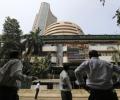
Trading sentiment in the equity markets this week will be guided by global cues, Covid-19 trends and quarterly earnings by market heavyweight TCS, analysts said. Investors will also monitor movement of rupee and crude oil as well as progress of monsoon, they added.

The Allianz Group, the German financial services powerhouse, is planning to foray into the booming asset management business in India.
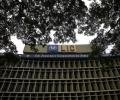
The government is working towards further review and simplification of the foreign direct investment (FDI) policy to facilitate the proposed initial public offering (IPO) of the Life Insurance Corporation (LIC), Department for Promotion of Industry and Internal Trade (DPIIT) secretary Anurag Jain said on Thursday. The final decision will be taken by the Cabinet. The industry department is working together with the finance ministry's department of financial services (DFS) and department of investment and public asset management (DIPAM) towards a successful listing of the life insurer on the domestic bourses, which is expected to be the largest in India.

Small-cap stocks raked in big gains in fiscal 2021-22 by giving up to 36.64 per cent returns, outshining the bigger benchmark gauge and experts believe that they may continue to outperform in FY23. Markets faced many headwinds in the latter part of the last fiscal with the emergence of geopolitical tension, inflation concerns and FII selling. Analysts said that the first half of the last fiscal was very good, while the market entered into consolidation in the second half, combined with high volatility.

Believe it or not, the regulator is even stretching its arm to identify stressed borrowers and gauge the 'distance to default' as a measure of a particular bank's fragility, reveals Tamal Bandyopadhyay.

Union Finance Minister Nirmala Sitharaman on Monday said banks need to focus more on being customer-friendly so that the process of availing credit becomes more hassle-free for borrowers. However, the minister made it clear that banks do not have to be lenient on credit underwriting standards by taking any adverse risks on a proposal. At a meeting between industry representatives and the finance minister, a startup founder in the baking business suggested for credit to be available hassle-free, to which largest lender SBI's chairman Dinesh Kumar Khara said a startup's worries are more on the equity side and assured full support in lending if sufficient equity is on the table.
The domestic market for business process outsourcing - which is growing at a compound annual growth rate of 50 per cent - is catching the attention of BPO companies that have traditionally catered to the international market.

Investors need to evaluate how they stack up against other high credit quality fixed-income options before putting money in them.

Nikunj Saraf, Vice President Choice Wealth, will answers your MF queries.
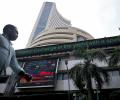
RBI policy, macro data, company earnings to decide market course this week: Experts

'For all of us at Amazon, it is 'Bharat first'.' 'We are keeping the Indian customer at the centre of what we are doing.'

Tech giant Microsoft on Wednesday launched a new programme Microsoft AI Innovate for nurturing and scaling start-ups that are leveraging Artificial Intelligence (AI). The 10-week initiative will support start-ups in India leveraging AI technologies, helping them scale operations, drive innovation, and build industry expertise. Both B2B and B2C start-ups from various industries, including financial services, healthcare, education, agriculture, space, manufacturing and logistics, retail, and e-commerce can participate in the quarterly cohorts of this programme.

Equity indices gave up early gains to close in the red for the third session on the trot on Wednesday, weighed by selling in banking and finance counters amid inflationary pressures and persistent foreign fund outflows. A weak rupee and lacklustre global cues also kept buying sentiment in check, traders said. The 30-share BSE Sensex opened on a firm footing but failed to hold on the momentum, finishing 237.44 points or 0.41 per cent lower at 58,338.93. On similar lines, the broader NSE Nifty dipped 54.65 points or 0.31 per cent to close at 17,475.65.

Stock crashes 6.5%; top 5 firms lose Rs 33,883 crore in market cap

While Nifty 50 reflects changes in 40 years, it also shows what is missing: Low-cost manufacturers at one end, and deep-value players at the other. Also missing are technology players, observes T N Ninan.

Fitch Ratings has upgraded Reliance Industries Ltd's (RIL) rating to 'BBB', one notch above India's sovereign rating, as the company benefits from cash flow generation across diversified business segments and continuation of deleveraging. In a statement, Fitch said it has upgraded RIL's long-term foreign-currency issuer default rating (IDR) to 'BBB', from 'BBB-', with a negative outlook. At the same time, the agency has affirmed RIL's long-term local-currency IDR at 'BBB+' with a stable outlook.
These 15 wunderkinder are making serious bank running some of the largest public companies in the US.
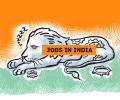
Job postings activity in April witnessed 3 per cent decline sequentially as the country is hit with the second wave of the pandemic leading to lockdowns, according to a report. The data indicates that the employment index saw a decline in job posting activity in April compared to March, by 3 per cent, according to the Monster Employment Index. The overall job postings also witnessed a decline of 4 per cent year-on-year as of April 2021, compared to April 2020.
It's a blessing in disguise, of sorts. Indian companies, which had to face a huge attrition problem over the last few years, can finally breathe easy. HR analysts said the economic slowdown is expected to reduce the attrition rates across industries, at least for the next two quarters.

Having grown swiftly since the acquisition of Flipkart by Walmart in 2018, it was looking at a valuation of $10 billion. However, factors such as lack of diversification, new e-commerce and data policies, as well as the overall investment environment, have slowed the process.

Billionaire Mukesh Ambani's Reliance Industries has announced the contours of carving out of its oil-to-chemicals (O2C) business into an independent unit with a USD 25 billion loan from the parent, as it looks to unlock value by selling stakes to global investors like Saudi Aramco.

The past eight months have seen vast improvement in the Indian economy, says Edelweiss Group chairman and chief executive Rashesh Shah, who feels domestic-oriented sectors are likely to do better.

The deal street has come out of the record lows in the pandemic-washed out June quarter with transaction value growing almost 6 per cent to $21.64 billion in the July-September quarter, thanks to a string of equity sales by Reliance in its telecom and retail arms, says a report.
Young chief executives are becoming an endangered species.

Billionaire Mukesh Ambani on Wednesday pitched for using the USO Fund to subsidise smartphones for select groups to help penetrate the digital revolution and said India should make the rollout of 5G or the fifth-generation technology standard for broadband cellular networks a national priority. As much as 5 per cent of the licence fee paid by telecom operators goes to the Universal Service Obligation (USO) Fund, which was set up in April 2002 for achieving universal service objectives by providing access to telephone services in rural and remote areas and creation of infrastructure for mobile services and broadband in these areas. However, according to the CAG, less than half of the funds so collected are transferred for the said purpose.

Exuding confidence in sustaining the tempo of credit growth, public sector bankers said on Wednesday that consolidation in the public sector bank (PSB) space has given them a robust base to scale. The privatisation of PSBs can be done through divestment of government stake to a wider base of investors without haste. There is nothing to worry about at this point (high credit offtake) as underwriting standards and risk management are much better.

Microsoft has become the first global Big Tech company to join the Open Network for Digital Commerce (ONDC), an Indian government initiative for developing a first-of-its-kind open network for digital commerce. The world's second-largest technology firm intends to introduce social e-commerce via its app in the Indian market later this year. ONDC is expected to open to the public in Bengaluru over the next fortnight as it enters into the next phase of the pilot for further fine-tuning before rollouts in other cities, according to a source in the know.

The latest one being Ken Toombs, global head of consulting at the Bengaluru-based entity.

The draft amalgamation scheme of Punjab and Maharashtra Co-operative (PMC) Bank with Unity Small Finance Bank (SFB) allowed quick relief to depositors with savings of up to Rs 5 lakh, but a long wait for those who had their nest egg with the scam-tainted bank. If the scheme gets approved, 96 per cent (or 880,000 of 924,000) depositors will get their full money straightaway after PMC is merged with Unity SFB. According to the draft scheme, retail investors may get up to Rs 5 lakh from the Deposit Insurance and Credit Guarantee Corporation (DICGC) instantly, and then some more in phases till they can recall their full deposits after 10 years.

The ban prescribes Rs 5,000 fine for the first-time offenders and Rs 10,000 for the second-time offenders. Those who violate the ban for the third time will face a fine of Rs 25,000, along with a three-month imprisonment.

Waves of foreign portfolio investments worth over Rs 51,000 crore splashed into the Indian market in 2021 as overseas investors turned net buyers of domestic securities for the third straight year while excess global liquidity and other factors steered the ebb and flow of their investing ways. With the global financial system still flush with liquidity, emerging market assets, especially equities, might well remain the preferred investment avenue for many more months to come, experts opined. As the equities sizzled during most of 2021, that also saw economy slowly coming back into the recovery path, Foreign Portfolio Investors (FPIs) turned net buyers but their investment is much less compared to net inflows of Rs 1.03 lakh crore in 2020.

Spiralling prices pinched the pocket of consumer as edible oil, fuel and many other commodities turned dearer this year amid pandemic-induced disruptions but the inflationary pressure is anticipated to ease, though marginally, in the coming months. As consumers, at retail as well as wholesale levels, are willy-nilly learning to live with the new normal of curbs to contain the spread of coronavirus infections, experts are of the view that elevated inflation is likely to stay longer. After dealing with the devastating blows from the second COVID wave, especially during the April-June period, the economy is well on the revival path but the emergence of Omicron might unsettle the recovery trajectory in the short term.

Gautam Adani was the world's third and Asia's richest man a month back but a damning report by a US firm triggered a massive sell-off in shares of his apples-to-airport group, plunging his own wealth by $80 billion and the tycoon slipping to No.30 on the world billionaire index. Adani's sprawling conglomerate, which spans from sea ports to airports, edible oil and commodities, energy, cement and data centres, is under attack by US short-seller Hindenburg Research, which successfully deflated electric-vehicle maker Nikola Motors in 2020. Hindenburg, which held short positions in unidentified shares of Adani Group firms through its US-traded debt and offshore derivatives, on January 24 accused the conglomerate of "brazen stock manipulation and accounting fraud" and using a number of offshore shell companies to inflate stock prices.
 © 2026 Rediff.com - Advertise with us - Disclaimer - Privacy Policy - Sitemap - Feedback - About us - Terms of use - Grievances